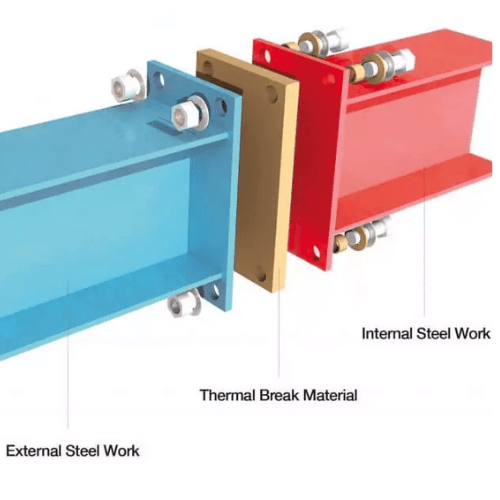
Structural steel is a popular choice for building construction due to its strength, durability, and cost-effectiveness. However, one of the major drawbacks of using structural steel is its high thermal conductivity. This means that structural steel can conduct heat easily, leading to heat transfer between different parts of a building. To mitigate this issue, a structural steel thermal break is often used. This is a material that is placed between two pieces of structural steel to reduce heat transfer.
The use of a structural steel thermal break can have numerous benefits for building owners and architects. For instance, it can help reduce energy consumption by minimizing heat loss in the winter and heat gain in the summer. Additionally, it can improve the overall comfort and indoor air quality by reducing the risk of condensation and mold growth.
One of the most popular types of structural steel thermal breaks is the steelwork thermal break. This type of thermal break is designed to be used in conjunction with structural steel framing systems and can be easily integrated into existing building designs. The steel to steel thermal break is another popular option, which is designed to be used in situations where there is a need to separate two pieces of structural steel.
When selecting a structural steel thermal break, there are several factors to consider. These include the thermal conductivity of the material, its durability, and its ease of installation. It is also essential to consider the specific needs of the building, such as its climate, occupancy, and insulation requirements. By choosing the right structural steel thermal break, building owners and architects can ensure that their buildings are energy-efficient, comfortable, and safe.
In addition to reducing heat transfer, structural steel thermal breaks can also help to improve the overall performance of a building. For example, they can help to reduce the risk of structural damage caused by thermal expansion and contraction. They can also help to improve the building’s acoustic performance by reducing the transmission of noise between different parts of the building.
When it comes to installation, it is essential to follow the manufacturer’s instructions carefully. This will ensure that the thermal break is installed correctly and that it functions as intended. Additionally, it is crucial to ensure that the thermal break is properly sealed to prevent air leaks and moisture ingress.
In conclusion, structural steel thermal breaks are an essential component of modern building design. They can help to reduce heat transfer, improve energy efficiency, and enhance the overall performance of a building. By selecting the right type of thermal break and following proper installation procedures, building owners and architects can ensure that their buildings are safe, comfortable, and sustainable.
- Reducing heat transfer between structural steel components
- Improving energy efficiency and reducing energy consumption
- Enhancing the overall performance of a building
- Reducing the risk of structural damage caused by thermal expansion and contraction
- Improving the building’s acoustic performance
Structural steel thermal breaks are available in a range of materials, including foam, fiberglass, and plastic. When selecting a material, it is essential to consider its thermal conductivity, durability, and ease of installation. It is also crucial to ensure that the material is compatible with the building’s insulation and climate requirements.
In summary, structural steel thermal breaks are a critical component of modern building design. They can help to reduce heat transfer, improve energy efficiency, and enhance the overall performance of a building. By selecting the right type of thermal break and following proper installation procedures, building owners and architects can ensure that their buildings are safe, comfortable, and sustainable.
For more information on structural steel thermal breaks, please visit the website of a leading supplier of thermal insulation products, which offers a range of solutions for reducing heat transfer and improving energy efficiency.
One of the most popular types of structural steel thermal breaks is the steel thermal break, which is designed to be used in conjunction with structural steel framing systems.
When selecting a structural steel thermal break, it is essential to consider the specific needs of the building, such as its climate, occupancy, and insulation requirements.
By choosing the right structural steel thermal break, building owners and architects can ensure that their buildings are energy-efficient, comfortable, and safe.